Connecting Payment APIs with Customer Management Platforms for Streamlined Operations in Expanding Retail Networks
Written by Devon Schmid · Sep 19, 2026
Connecting Payment APIs with Customer Management Platforms for Streamlined Operations in Expanding Retail Networks
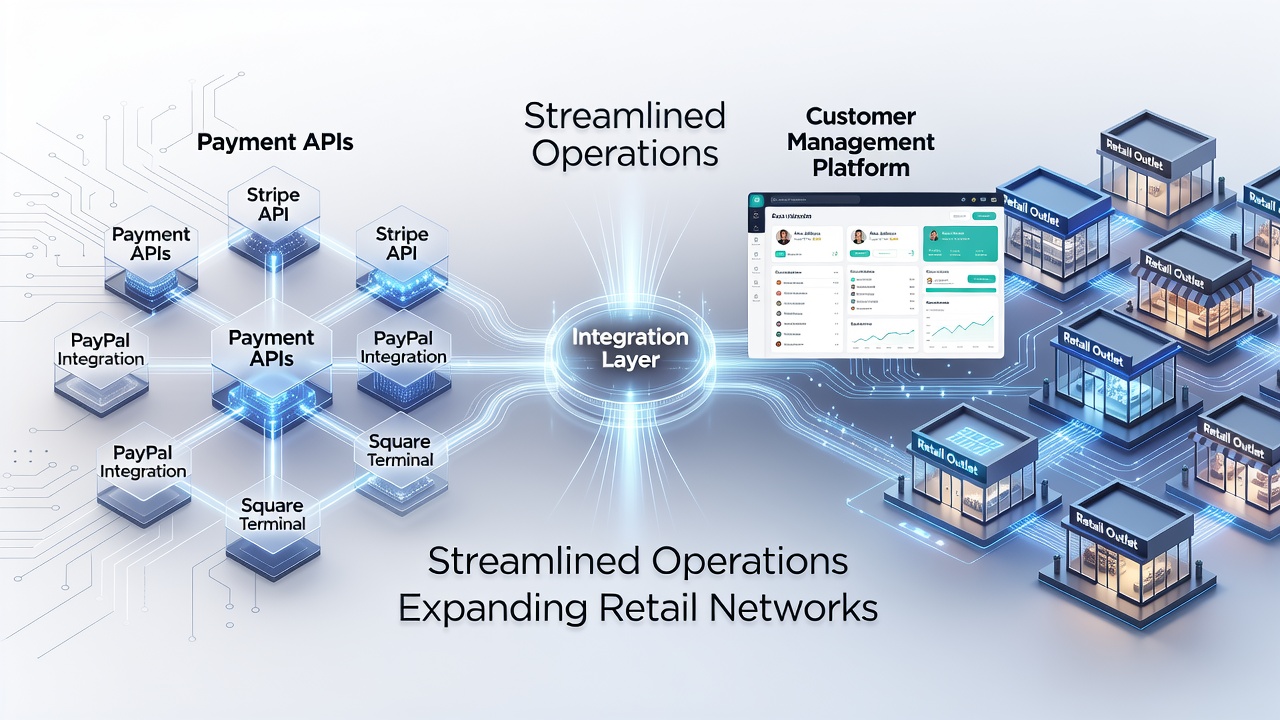
Retail networks continue to expand across regions and channels, and the integration of payment APIs with customer management platforms has become a standard approach for handling transaction data alongside customer records. Payment APIs handle the secure transfer of funds and authorization details while customer management platforms store profiles, purchase histories, and interaction logs; when connected, these systems allow retailers to maintain consistent records without manual data transfers between separate tools.
Core Components of the Integration
Payment APIs provide endpoints that push transaction confirmations, refund details, and settlement reports directly into customer management platforms, and this connection supports automated updates to individual customer accounts as soon as a sale completes. Retail operators often map API fields such as transaction ID, amount, and payment method to corresponding records in the customer platform so that loyalty points, order status, and contact preferences update in one location rather than across disconnected databases. Data indicates that synchronized systems reduce duplicate entry errors and shorten the time required to reconcile daily sales across multiple outlets.
Operational Benefits in Multi-Location Retail
Expanding retail networks face the challenge of coordinating payment processing at physical stores, online channels, and pop-up locations, and the link between payment APIs and customer management platforms addresses this by creating a single view of each transaction tied to a verified customer profile. When a customer completes a purchase at one location, the API delivers the details to the central platform, enabling staff at other sites to access order history and preferences without separate queries. Observers note that this setup supports consistent service delivery as chains grow, since inventory adjustments and customer communications draw from the same unified dataset.
Technical Connection Methods
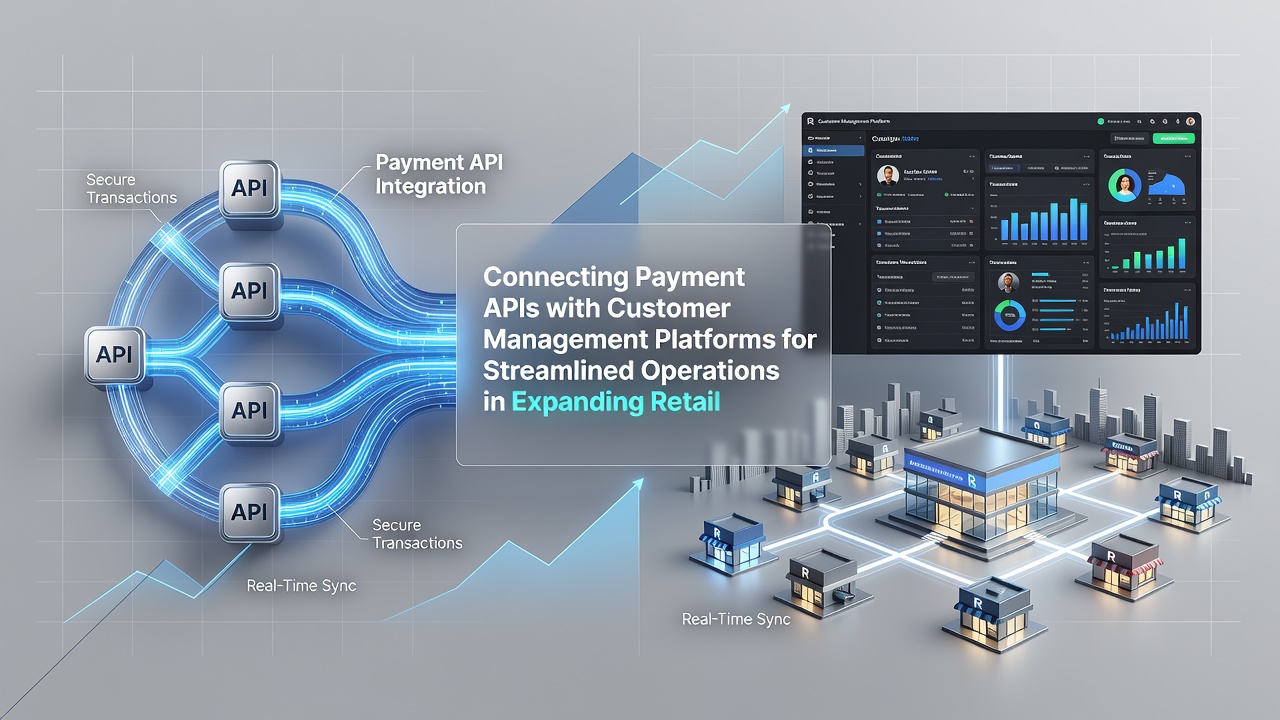
Developers typically use webhook subscriptions or scheduled API calls to move payment data into customer management platforms, and these methods allow real-time or near-real-time synchronization depending on the volume of transactions. Authentication protocols such as OAuth 2.0 secure the data exchange, while mapping rules ensure that fields from the payment system align with existing customer records. In September 2026 the European Central Bank published updated technical standards for payment data exchange that encourage the use of structured APIs for retail applications, and many operators have adopted these guidelines to maintain compatibility across borders.
Retailers who connect these systems report fewer discrepancies between payment ledgers and customer databases, and the automation frees staff to focus on sales rather than data cleanup. One study of mid-sized retail chains revealed that integrated platforms cut the average time spent on end-of-day reconciliation by more than half when compared with manual processes.
Examples from Expanding Retail Operations
Take a regional clothing retailer that added five new stores in 2025 and integrated its payment API with an existing customer management platform; transaction details now flow automatically into customer profiles, allowing marketing teams to trigger personalized follow-up messages based on recent purchases. Another case involves a specialty food chain that expanded into online sales while maintaining physical locations, and the API connection ensured that both channels updated the same customer records without creating duplicate entries. Those who've studied these implementations note that the approach scales as networks grow because the core mapping rules remain consistent even when new payment methods or store locations are added.
Data Handling and Compliance Considerations
Payment APIs transmit sensitive financial information, so encryption standards and tokenization protect card details during transfer to customer management platforms, and compliance with regional data protection rules requires clear audit trails for each data movement. Retail networks operating in multiple countries must align their integrations with local requirements, such as those outlined by the Australian Competition and Consumer Commission for consumer data handling and by corresponding bodies in other jurisdictions. The connection also supports reporting needs because aggregated transaction data pulled through the API can feed directly into compliance dashboards without additional formatting steps.
Future Developments in Retail Connectivity
Industry reports project continued growth in API-based connections between payment systems and customer platforms as retail networks expand into new markets, and standards bodies continue to refine specifications that simplify these links. Retail operators who maintain these integrations gain the ability to track customer behavior across channels while keeping payment records accurate and accessible for operational decisions. The reality is that the technical foundation already exists for most major platforms, and expanding networks continue to adopt the approach to support day-to-day coordination without increasing administrative overhead.
Conclusion
Connecting payment APIs with customer management platforms delivers a practical method for retail networks to maintain accurate, synchronized records as they grow across locations and channels. The technical steps involve mapping data fields, securing transfers, and aligning with regulatory guidelines, all of which support streamlined daily operations. Research indicates that these integrations reduce manual work and improve record consistency, providing a factual basis for their adoption in expanding retail environments.