Optimizing Vendor Payout Synchronization with Live Inventory Signals through Tokenized Gateway Connections in Seasonal Retail Networks
Written by Devon Schmid · Oct 31, 2026
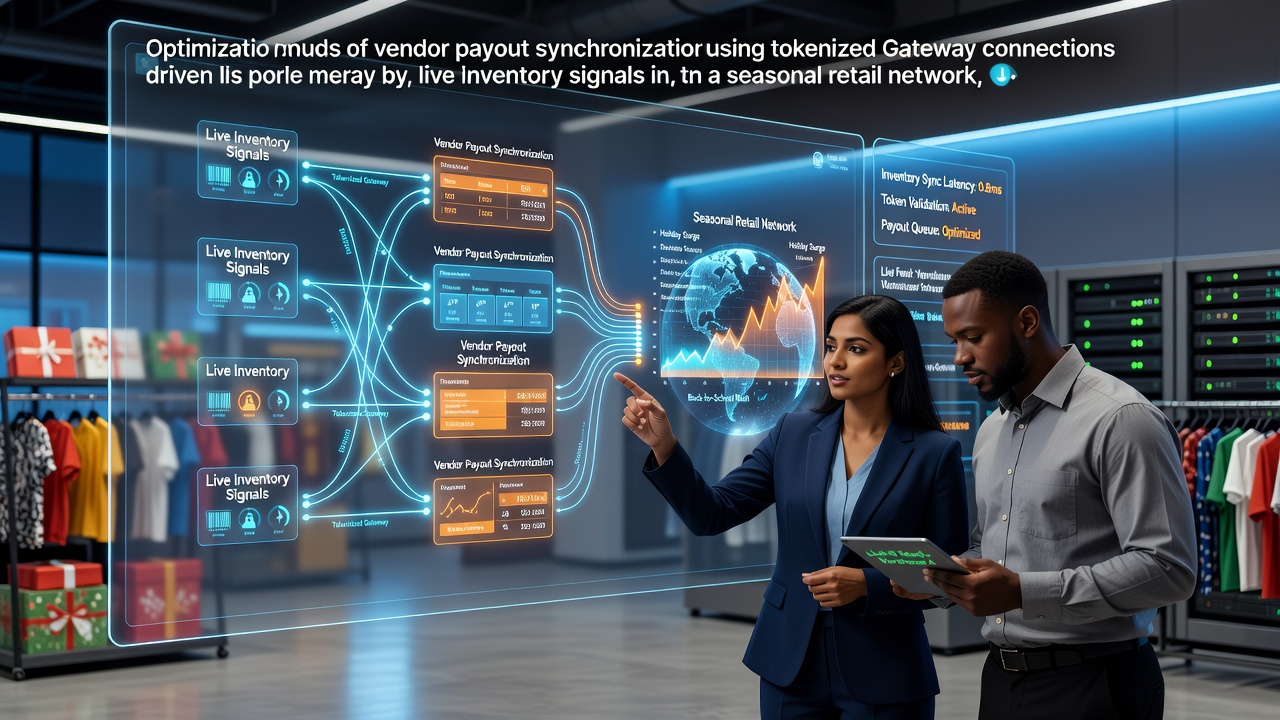
Optimizing Vendor Payout Synchronization with Live Inventory Signals through Tokenized Gateway Connections in Seasonal Retail Networks
Seasonal retail networks operate under tight windows where inventory levels shift rapidly and vendor payouts must align with actual stock movement to maintain cash flow accuracy. Tokenized gateway connections transmit encrypted payment credentials while carrying live inventory signals that adjust disbursement amounts in real time. Research from the Federal Reserve indicates that synchronized systems reduce settlement discrepancies by up to 23 percent in high-volume seasonal operations during peak periods such as October 2026 holiday preparations.
How Tokenized Gateways Carry Inventory Data
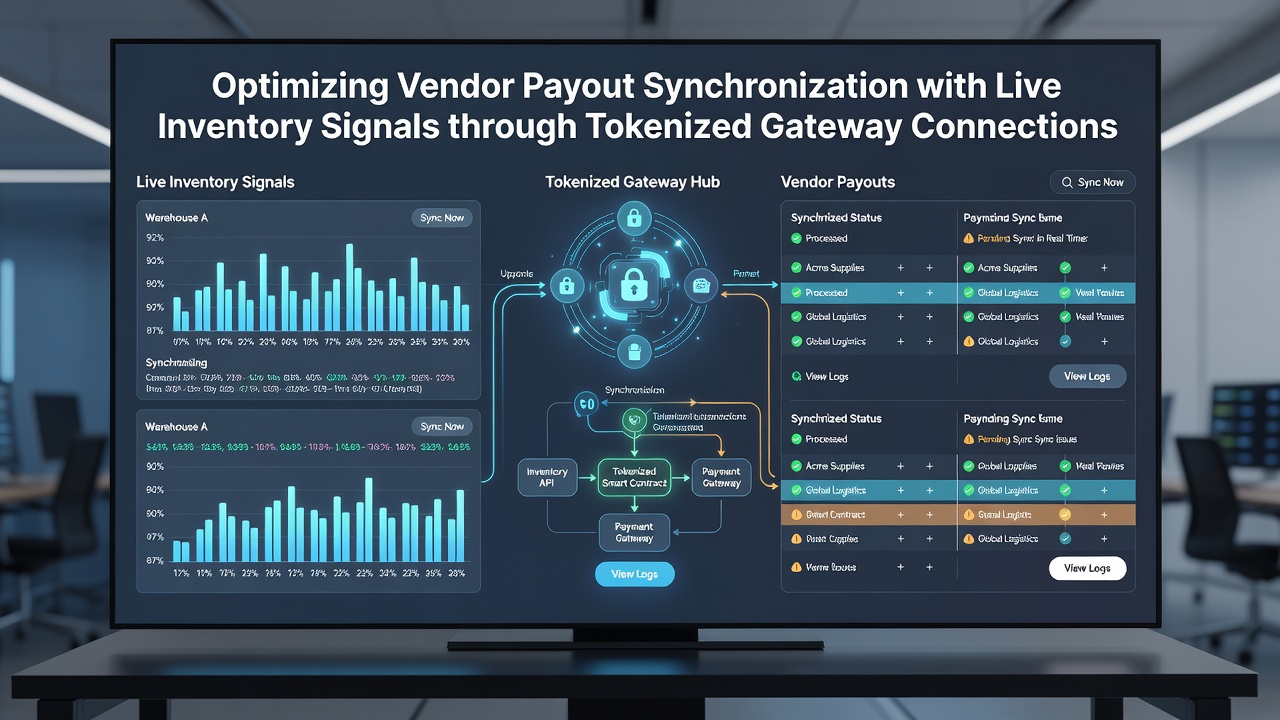
Tokenized gateways replace sensitive card details with unique tokens that travel alongside inventory updates from point-of-sale terminals or warehouse scanners. When stock counts drop below predefined thresholds, the gateway triggers proportional payout releases to vendors without exposing full payment information across multiple network hops. Observers note that this dual-purpose data stream operates through API endpoints that poll inventory databases every few minutes and embed the results in authorization messages. Those who manage seasonal craft fairs report that the approach prevents overpayment when products sell out mid-event.
Integration Patterns Across Multi-Channel Seasonal Operations
Seasonal vendors often sell through pop-up locations, online marketplaces, and mobile apps simultaneously. Live inventory signals flow from each channel into a central tokenized gateway that reconciles quantities before calculating vendor shares. Data shows that unified connectors reduce payout delays from days to hours because inventory updates arrive concurrently with transaction records. Experts at research institutions such as the University of Melbourne have documented cases where seasonal operators cut reconciliation staff hours by 35 percent after adopting these connections during 2025-2026 market cycles.
Security Protocols Supporting Real-Time Synchronization
Tokenization standards established by NIST limit exposure of payment data while allowing inventory fields to travel within the same encrypted payload. Seasonal networks add time-stamped inventory hashes that match against independent stock records before any payout executes. When mismatches occur, the system holds funds and flags the transaction for review without halting the entire batch. Reports from the European Central Bank highlight that such layered verification maintains settlement integrity across borders where seasonal goods move between suppliers in different time zones.
Operational Examples from Seasonal Retail Networks
One mid-sized holiday market network in North America implemented tokenized gateways that received hourly inventory feeds from RFID readers at each stall. Payout amounts adjusted automatically when certain product categories sold faster than projected, ensuring vendors received only the portion tied to confirmed sales. Another operator coordinating farmers' markets across three states used similar connections to sync mobile app sales with physical stall inventory, producing daily payout files that reflected live stock depletion rather than end-of-day tallies. These implementations demonstrate how the architecture scales from single-site events to regional networks without requiring separate reconciliation platforms.
Challenges in Maintaining Signal Accuracy
Live inventory signals can contain errors from scanner misreads or delayed uploads, which propagate into payout calculations if not filtered. Seasonal operators counter this by running parallel validation checks that compare gateway data against secondary sources such as supplier invoices before final disbursement. Network latency during peak hours in October also affects synchronization speed, prompting some networks to buffer signals and process them in short batches rather than continuous streams. Studies reveal that networks employing these buffers experience fewer payout reversals than those attempting fully real-time execution under variable connectivity conditions.
Future Developments Expected by Late 2026
Industry reports project wider adoption of tokenized gateways that incorporate predictive inventory models, allowing payouts to reserve portions of funds based on forecasted depletion rates. Seasonal retail networks are testing connections that link weather data and event attendance figures to inventory signals, further refining payout timing. Regulatory bodies in Canada and Australia continue to issue guidance on data field standards that support both payment security and inventory transparency without increasing compliance overhead for smaller vendors.
Conclusion
Tokenized gateway connections that carry live inventory signals enable seasonal retail networks to align vendor payouts with actual stock movement across multiple sales channels. The approach relies on established tokenization standards, parallel validation routines, and API polling frequencies that match operational demands. Data from regulatory and academic sources confirms measurable reductions in settlement discrepancies and reconciliation time when these systems operate during concentrated selling periods such as October 2026.